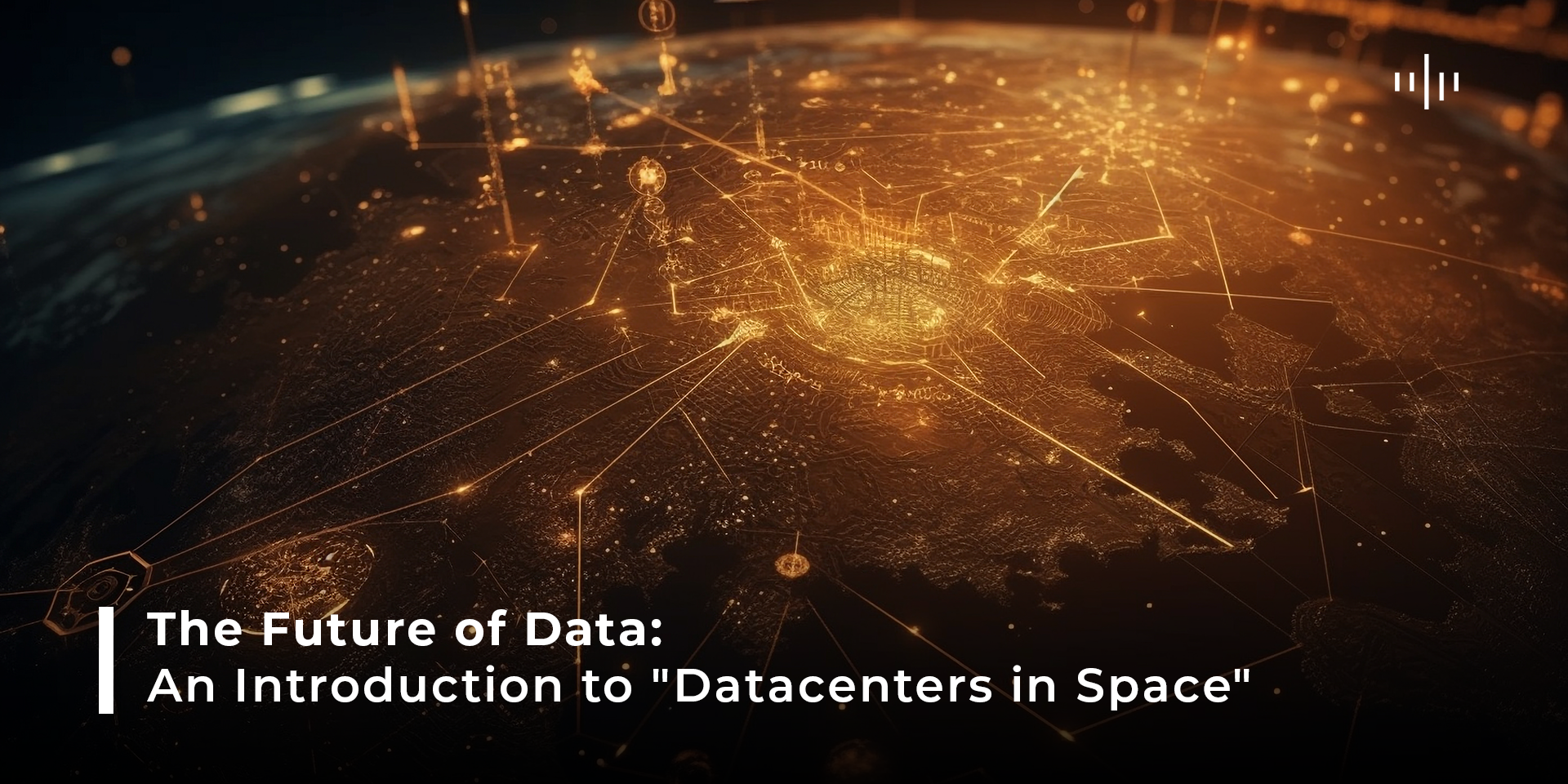
The Future of Data: An Introduction to "Datacenters in Space"
In an era where we produce and consume massive amounts of data every second, terrestrial data center infrastructures are facing immense challenges ranging from astronomical energy consumption and space limitations to severe environmental impacts. The concept of lifting data centers into space is no longer just science fiction; it is becoming the infrastructure of the future, set to unlock traditional limitations and pave the way for a global network technology revolution.
What is the Role of a Data Center on Earth?
Before looking up at the sky, we must first understand the core function of data centers on Earth.
- The Brain of the Internet: Data centers are dedicated facilities used to store, process, and distribute all digital data.
- The Processing Hub: Inside these buildings are thousands of computer servers, networking equipment, and storage systems working seamlessly 24/7.
- The Backbone of Every Application: Whether you are streaming movies, scrolling through social media, managing enterprise operations, or saving files to the Cloud, all that data must flow in and out of data centers to be processed.
What is a Datacenter in Space?
A Datacenter in Space involves miniaturizing and ruggedizing servers and storage equipment to endure extreme conditions, allowing them to be installed on satellites or space stations orbiting the Earth. The primary goal is to leverage the unique environment of space to solve the congestion and energy consumption issues of terrestrial data centers. Most importantly, it establishes a “processing node” right next to the original source of satellite data.
How Do Extraterrestrial Data Centers Work?
Taking computers to process data in space requires a fascinating operational mechanism adapted to the orbital environment:
- 100% Clean Energy (Solar Power): They utilize solar panels to harness energy directly from the sun. Because there is no atmosphere or cloud cover in space, power generation is continuous and highly efficient.
- Natural Cooling (Passive Cooling): Earth-based data centers require large amounts of water and massive air conditioning systems that consume immense electricity. In space, servers can radiate heat directly into the freezing void, completely eliminating the energy costs associated with cooling.
- Light-Speed Communication (Laser Communication): Transmitting data between satellites or back to Earth relies on high-frequency radio waves and advanced Optical Intersatellite Links (lasers). This technology offers incredibly high bandwidth and top-tier security.
- Space Edge Computing: This is the core advantage. Instead of sending massive amounts of raw data or heavy satellite imagery back to Earth which consumes valuable bandwidth, space datacenters filter, compress, and process the data on-orbit. They then send back only the crucial results and actionable insights.
The Differences: Earth vs. Space Data Centers
When comparing the two forms of data centers, stark differences emerge across various operational dimensions. Starting with the power source, terrestrial data centers heavily rely on grid electricity, much of which is still generated from fossil fuels, whereas space data centers operate entirely on 100% solar energy. Regarding cooling, Earth facilities require highly energy-intensive liquid and air cooling systems, while space facilities automatically benefit from heat radiation into the freezing vacuum.
For connectivity, terrestrial data centers rely primarily on underground or underwater fiber-optic cables, while their space counterparts use wireless technologies like radio frequencies or laser beams. Furthermore, in terms of maintenance, terrestrial data centers allow engineers to walk in and physically replace hardware immediately. In space, physical repairs are incredibly difficult, if not impossible, so systems are designed with high redundancy to be as self-reliant as possible. Finally, regarding latency, Earth-based centers respond almost instantly for users nearby, but space data centers are designed to break geographical boundaries, making them exceptionally better suited for providing comprehensive data connectivity to regional and remote areas worldwide.
The Dawn of a Global Infrastructure Revolution
A Datacenter in Space is not merely about moving servers to the sky to save the environment; it is about building the first “digital network” frontier in orbit. Once we have highly efficient data centers floating above the Earth, the next crucial step is integrating advanced technologies like Artificial Intelligence (AI) to work alongside them. It is exactly this convergence of Space Datacenters and AI that is about to permanently transform data management and global infrastructure.