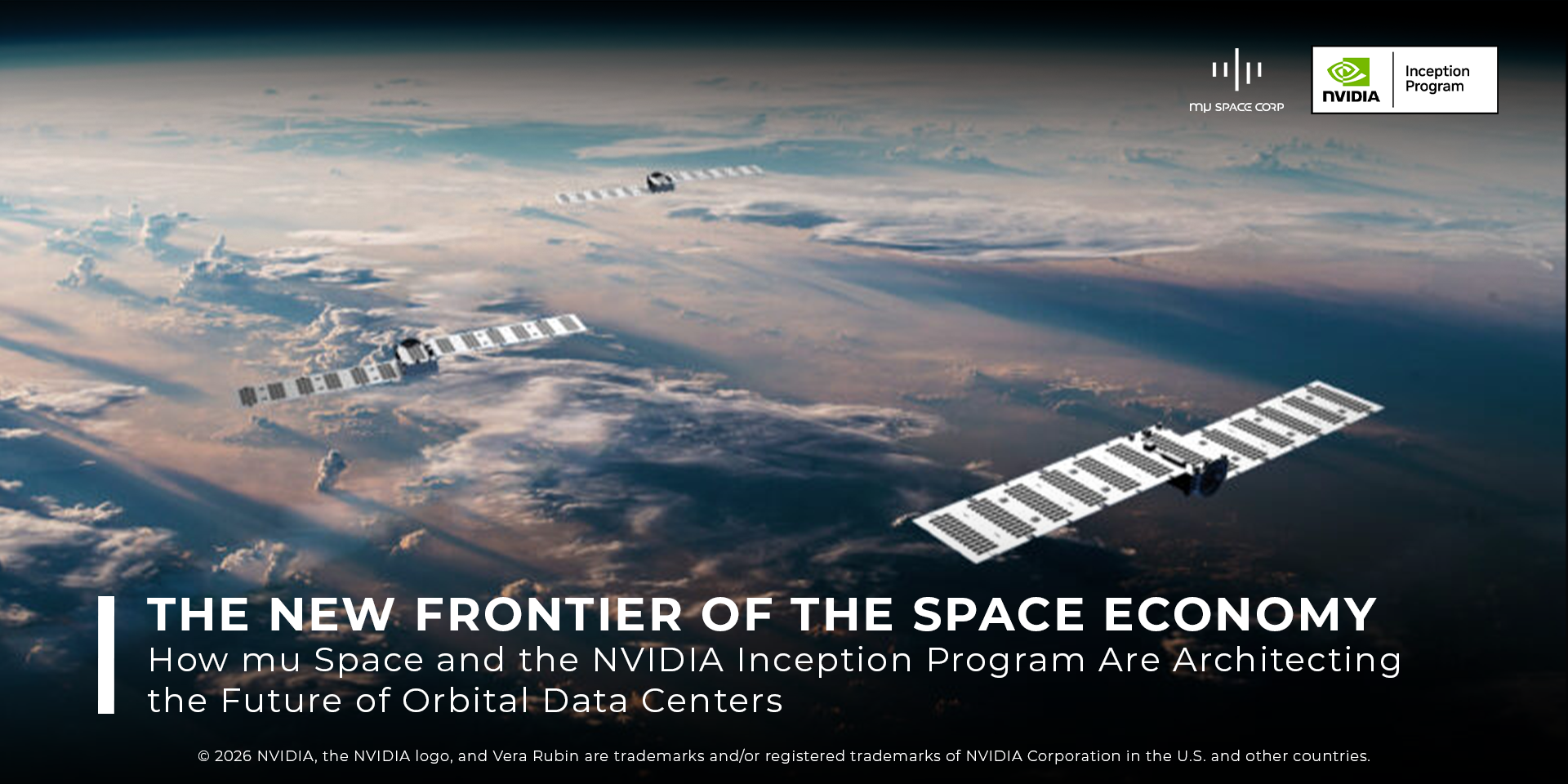
THE NEW FRONTIER OF THE SPACE ECONOMY
How mu Space and the NVIDIA Inception Program Are Architecting the Future of Orbital DataCenters
Executive Summary
As global dependency on Artificial Intelligence (AI) and high-performance computing intensifies, terrestrial
infrastructure is approaching a critical bottleneck. Environmental, structural, and political hurdles are making
the scaling of earth-bound data centers increasingly unsustainable. To bypass these multi-dimensional
challenges, mu Space is pioneering a paradigm shift: lifting processing nodes into orbit via a comprehensive
“Data Center in Space” initiative. By establishing a strategic alliance through the NVIDIA Inception program,
mu Space is pioneering a paradigm shift by lifting processing nodes into orbit via a comprehensive “Data Center in Space” initiative. The vision here is to accelerate AI and space exploration. By establishing a strategic alliance through the NVIDIA Inception program, mu Space combines its bespoke aerospace engineering prowess with next-generation processing power. This unlocks a massive commercial landscape within a rapidly expanding multiple trillion dollars space ecosystem that extends beyond Earth and towards the Moon.
Data centers on Earth serve as the fundamental backbone of modern digital life, yet their massive physical
and environmental footprint has become a significant liability. Conventional installations consume substantial
volumes of electrical grid power and heavily rely on intensive liquid and air cooling systems, which drain vital
regional water sources and raise carbon concerns. Furthermore, operators are increasingly constrained by
localized human capital scarcities, lengthy regulatory permits, and surging energy costs.
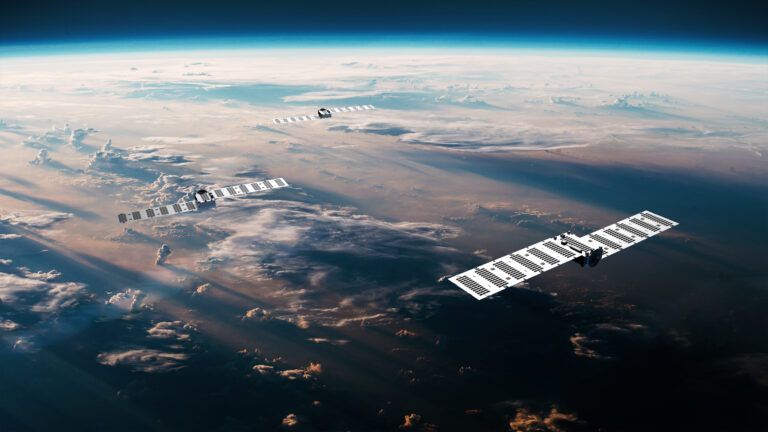
Moving compute infrastructure into Low Earth Orbit (LEO) effectively circumvents these terrestrial limitations.
In space, operations are fueled entirely by clean, uninterrupted solar energy. Without atmospheric scattering
or weather interference, solar arrays capture up to eight times more power per square meter compared to
identical installations on Earth. By shifting processing capabilities directly to where data is harvested (right next to satellite constellations), orbital data centers usher in an era of light-speed laser communication, massive bandwidth availability, and highly secure space edge computing. This infrastructure is not merely a solution to terrestrial limits, but a crucial foundation designed to accelerate deep space exploration.
“The world faces a large power gap by 2030, and the ground cannot fill it fast enough. In space, the
same solar panel produces far more power because the sun never sets and no clouds block it. Data
centers on Earth are becoming much more difficult to build and maintain.
The Economic Architecture of Space-Based Compute
From a commercial standpoint, the viability of an orbital data center hinges on optimizing the Total Cost of
Ownership (TCO). In the space domain, this optimization rests upon two critical economic levers: minimizing
the launch cost per kilogram and reducing the operational running cost per watt. While global launch
providers continue to aggressively drive down launch pricing, mu Space is focusing its internal innovations on
optimizing the cost per watt to run space hardware.
Through localized breakthroughs, mu Space targets a projected TCO of less than $1,500 per kilowatt per
year. Achieving this threshold fundamentally transforms space data centers from a conceptual novelty into a
highly profitable, scalable B2B enterprise. This lean operational structure enables mu Space to capture high-barrier-to-entry contracts from commercial enterprises demanding secure, high-throughput data connectivity without geographical limitations.

Solving the Thermal Conundrum: A Lucrative Market Niche
Operating complex hardware in a vacuum presents a critical challenge: heat dissipation. In space, the
absence of ambient air means traditional convection cooling is impossible; heat can only be radiated away. To
prevent processing units from exceeding safe thermal limits, satellites must deploy large, ultra-lightweight
radiators. This weight limitation dictates launch costs and governs overall scalability.
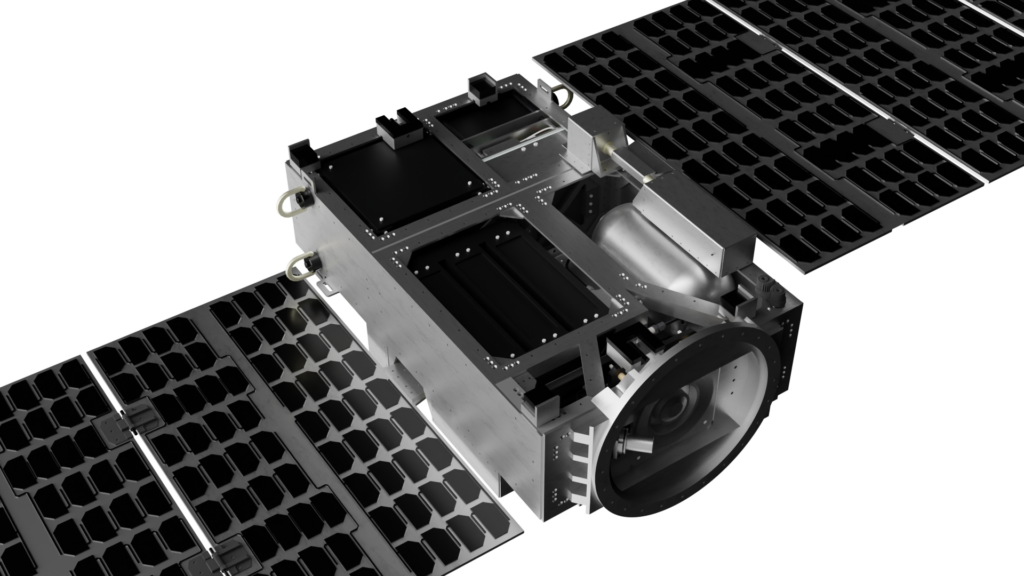
To address this challenge, mu Space has engineered a highly specialized thermal layer utilizing five
proprietary core technologies, including chips designed to run hotter (above 100 degrees Celsius), cold
welded interface materials for minimal resistance, structural vapor chambers utilizing the satellite body,
phase-change metallic materials for peak loads, and reflective radiators with advanced heat pipes.
By focusing explicitly on the thermal layer a fundamental cooling bottleneck that every orbital data center
must solve mu Space has secured an exceptionally valuable market niche. Within the broader space
market, mu Space projects an annual recurring revenue (ARR) potential of $750 million or more solely from
its proprietary thermal management solutions.
Strategic Alliance: Empowered by the NVIDIA Inception Program
To realize its vision of a digital network frontier in orbit, mu Space has established a strategic collaboration
with NVIDIA by joining the NVIDIA Inception program. This alliance is designed to nurture cutting-edge
startups, bridging the gap between mu Space’s specialized aerospace infrastructure and elite AI capabilities.
Collaborating closely with the dedicated space team at NVIDIA equips mu Space with advanced technical
support, premium hardware access, and unparalleled industrial credibility. This relationship allows mu Space
to significantly lower the engineering costs associated with hardware design refinement. By embedding its
proprietary platforms within the NVIDIA Inception program framework, mu Space ensures its space hardware
architectures are optimized to host complex AI models natively in a vacuum environment.
Next-Generation Processing and Orbital Edge AI
The technological roadmap of this partnership begins with the impending integration of the Space-1 Vera Rubin chipset devkit. Access to the advanced Vera Rubin architecture enables mu Space engineers to design
and refine complex, multi-layered assembly structures required to safely transfer heat from high-performance
silicon chips directly into the cosmic void.
Integrating top-tier AI processors allows the space data centers to perform heavy edge computing directly in
orbit. Instead of saturating valuable downlink bandwidth by transmitting massive streams of raw satellite
imagery and telemetry back to Earth, the onboard processors can filter, compress, and run deep-learning
models directly on-orbit, returning actionable insights to Earth instantly. Looking forward, mu Space is planning parallel architectures for multiple successive generations of hardware, systematically upgrading its
processing capabilities to accommodate future NVIDIA AI-satellite chipsets as the orbital constellation scales.
Conclusion and Investment Outlook
The convergence of space-based data centers and advanced artificial intelligence represents a multiple trillion dollars frontier. By establishing a robust niche in thermal layer management and solidifying its technical pipeline through the NVIDIA Inception program, mu Space is uniquely positioned to capture a dominant share of this emerging market. The progression towards U.S.-based project deployment delivers an unassailable
competitive moat, high-barrier B2B commercial viability, and reliable long-term financial security positioning
mu Space as a vital institutional pillar of the future global space infrastructure that reaches beyond Earth and towards the Moon.
© 2026 NVIDIA, the NVIDIA logo, and Vera Rubin are trademarks and/or registered trademarks of NVIDIA Corporation in the U.S. and other countries.