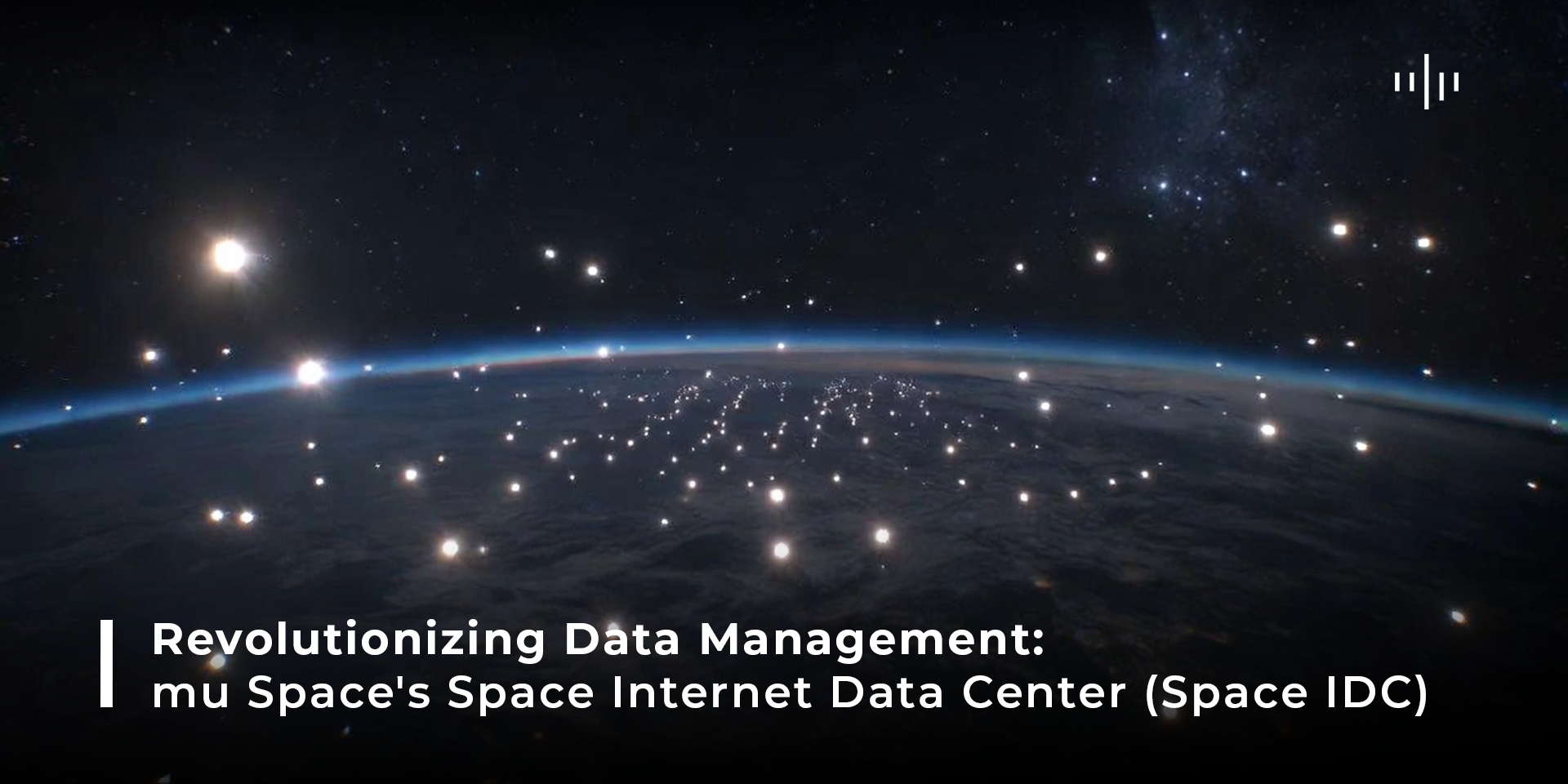
Revolutionizing Data Management: mu Space's Space Internet Data Center (Space IDC)
In an era where data is the new oil, traditional data centers on Earth are grappling with unprecedented challenges. From soaring energy costs to environmental concerns, the demand for innovative solutions has never been higher. At mu Space Corp, we’re pioneering the future of data infrastructure with our groundbreaking Space Internet Data Center (Space IDC) – a satellite-based system that leverages the vast potential of outer space to create efficient, sustainable, and scalable data solutions. As Thailand’s leading space technology and satellite company, we’re not just connecting the world; we’re elevating it to new orbits.

What is Space IDC?
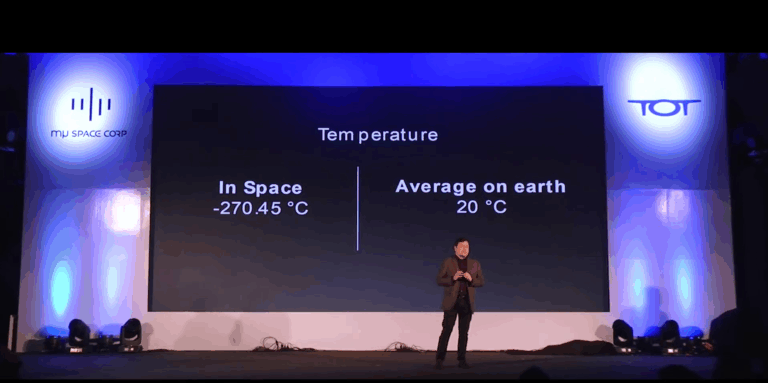
The Space IDC is an advanced data center satellite system designed to operate in Earth’s orbit. Composed of modified server computers and sophisticated communication systems, it transforms the vacuum of space into a natural cooling environment. Unlike ground-based data centers, which consume up to 30% of their energy on air conditioning alone, Space IDC harnesses the frigid temperatures of outer space (around -270°C or -454°F) for zero-cost cooling. This innovation drastically reduces energy consumption while maintaining high-performance computing for applications on Earth and beyond.
Developed as part of our mission to solve Earth’s diminishing natural resources by exploring space alternatives, Space IDC represents a leap in aerospace manufacturing and digital infrastructure. Our in-house expertise at facilities like Factory 0, 1, and beyond enables us to build radiation-hardened servers, AI-optimized power systems, and hybrid satellite-fiber networks that ensure seamless data interconnectivity.
Key Partnerships and Development Milestones
mu Space’s journey with Space IDC began with strategic collaborations that blend Thai innovation with global expertise. A cornerstone partnership is with TOT Public Company Limited, a state-owned telecommunications giant in Thailand. This joint project, initiated in the early 2020s, aimed to test and deploy space-based data services, including simulations and orbital payloads. Early experiments, such as our 2020 payload on the International Space Station (ISS), validated the concept and paved the way for full-scale operations.
More recently, in 2024, we expanded our ecosystem through a Memorandum of Understanding (MoU) with Interlink Telecom Public Company (ITEL), enhancing Low-Earth Orbit (LEO) satellite connectivity. This collaboration integrates Space IDC with fiber networks and data center solutions, providing resilient telecom services across Southeast Asia (SEA). Additionally, our ties with global players like Blue Origin for satellite launches and SES for broadband services ensure that Space IDC is built on a foundation of reliability and cutting-edge technology.
With a target first launch in 2025, we’re now in the deployment phase as of 2026, focusing on expanding gateway stations in Bangkok and beyond to support LEO operations. These milestones underscore mu Space’s commitment to turning conceptual designs into operational hardware, from satellite components to autonomous systems.
Benefits of Space-Based Data Centers
The advantages of Space IDC extend far beyond energy savings, addressing key pain points in the global data economy, projected to reach $500 billion by 2030:
- Energy Efficiency and Sustainability: By eliminating the need for massive cooling systems, Space IDC reduces carbon emissions and aligns with net-zero goals. This is crucial for industries like AI, finance, healthcare, and e-commerce, where data demands are exploding.
- Scalability Without Limits: Orbit-based systems bypass land constraints, allowing infinite expansion. Ideal for SEA’s booming digital market, it supports edge computing and low-latency connectivity for remote areas, bridging the digital divide.
- Resilience and Security: In space, data centers are immune to earthly disasters like floods or power outages. Hybrid networks provide backup routes, ensuring uninterrupted operations for critical sectors.
- Cost-Effectiveness: Lower energy use translates to reduced operational costs, making high-performance computing accessible to more businesses in Thailand and the region.
Imagine AI workloads processed in orbit, with data beamed back to Earth in real-time – that’s the transformative power of Space IDC.
Future Visions: Expanding Horizons
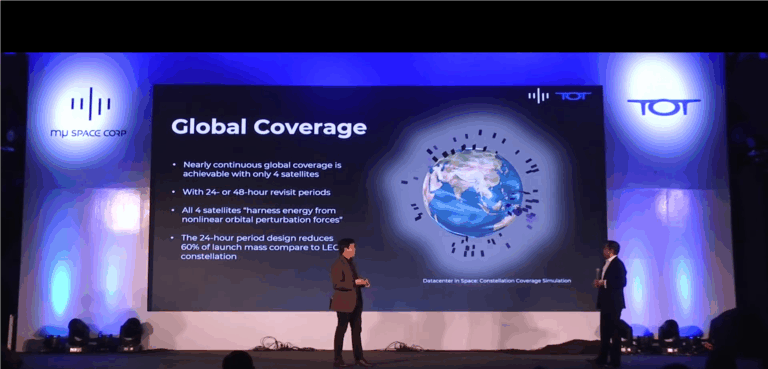
Looking ahead, mu Space envisions Space IDC as a cornerstone of space tourism, lunar exploration, and resource mining. Integrated with our upcoming projects – including autonomous robots, spacesuits, and spaceships – it will support data-intensive missions like searching for alternative resources on the Moon. By 2030, we aim to deploy a full constellation of orbital data centers, enhancing global connectivity and sustainable tech.
As part of Thailand’s growing space industry, we’re fostering collaborations with entities like GISTDA and international partners to drive innovation.
Join the mu Space Revolution
At mu Space Corp, we’re dedicated to solving real-world problems through space technology. Space IDC isn’t just a project; it’s a vision for a sustainable digital future. Whether you’re a telecom operator, data center manager, or innovator, we invite you to explore partnership opportunities and stay updated on our progress.
For more details, visit our Products & Tech page or contact us at info@muspacecorp.com. Follow us on X at @muSpaceTech for the latest updates. Together, let’s take data to the stars!